Windows flanking main entrance to the Sanctuary

The windows on either side of the main sanctuary entrance/exit were added after the initial construction of the sanctuary, and contain a number of Christian symbols.

Window on the left side of the main sanctuary entrance, as you face the back of the sanctuary.
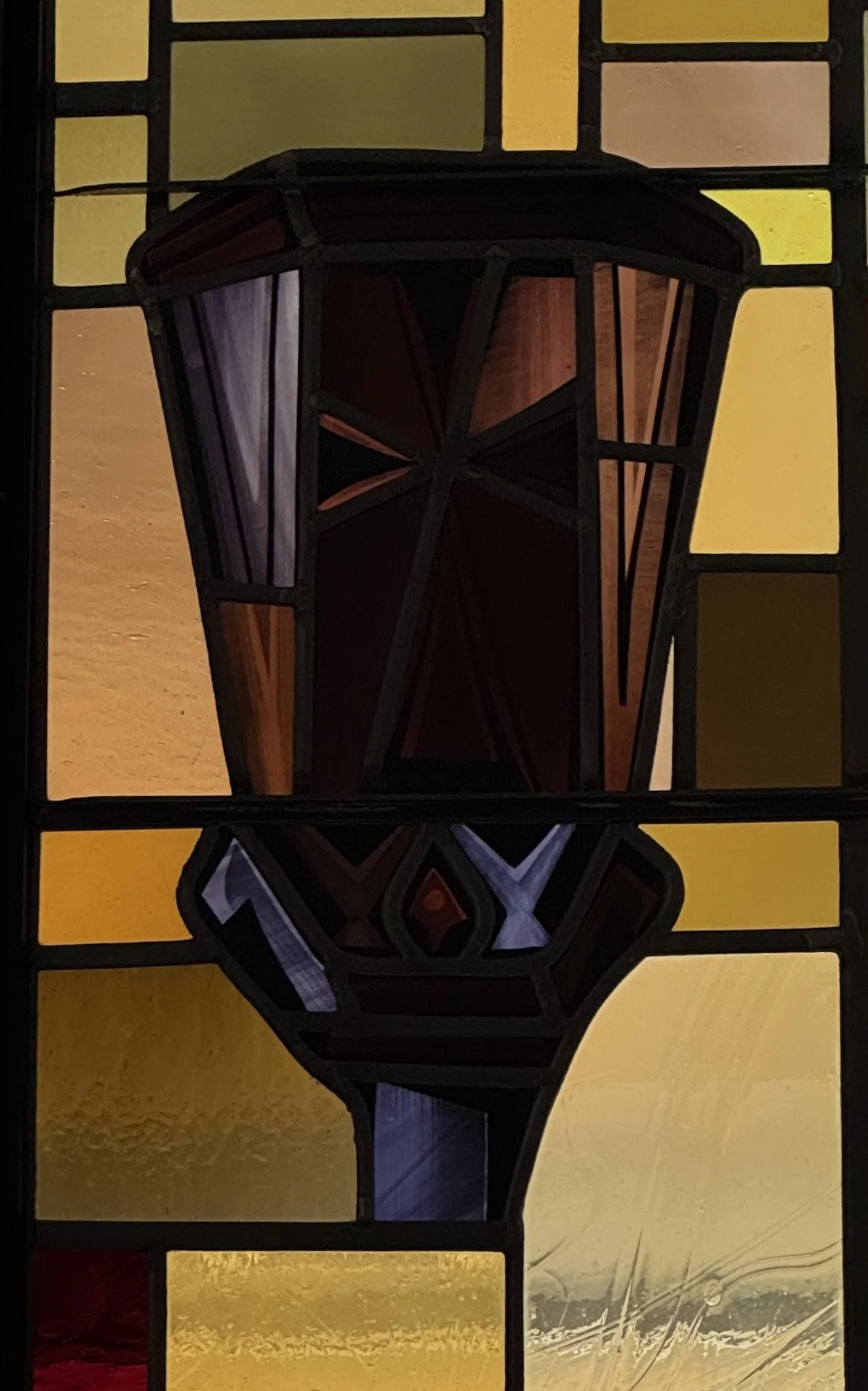
A pulpit represents the word of God and the centrality of preaching in Protestant worship. One of the concerns at the time of the Reformation was that worship had become so focused on the eucharist that the preaching of God’s word had been neglected, and that without this preaching people had come to hold some superstitious beliefs about the sacrament. Thus, from its outset Protestant worship has been intensely centered around God’s word. This emphasis has been especially noteworthy within our Reformed branch of the Protestant movement. The sacraments (baptism and the Lord’s Supper/eucharist) are of course also essential for us, but they are always celebrated in combination with the word interpreting what these sacraments mean.
(the pulpit was originally directly above John Knox)
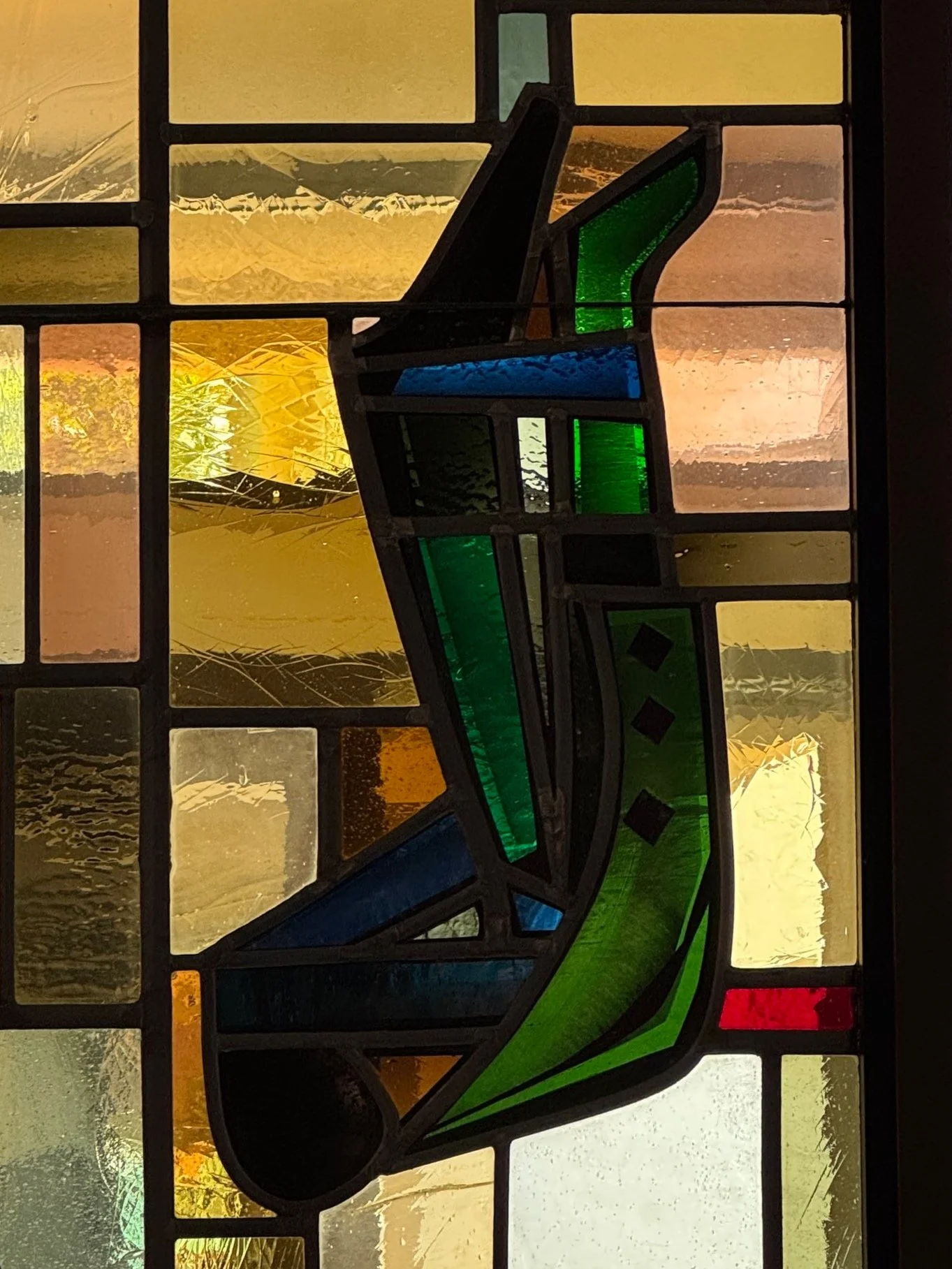
A plow, representing the influence of the Reformation on the life of the common people. One famous example of this Reformation/plow connection comes from the English Reformer William Tyndale, who early in the Reformation stated his goal to make it so that “the boy who drives the plow” would know Scripture better than the Pope. This calling led Tyndale to translate and publish the first mass-produced English-language Bible.
The plow is also an image that Jesus uses to represent the work of discipleship and single-minded commitment to the gospel, stating that “No one who puts a hand to the plow and looks back is fit for the kingdom of God” (Luke 9:62).
(the plow was originally at the bottom of the John Calvin window)
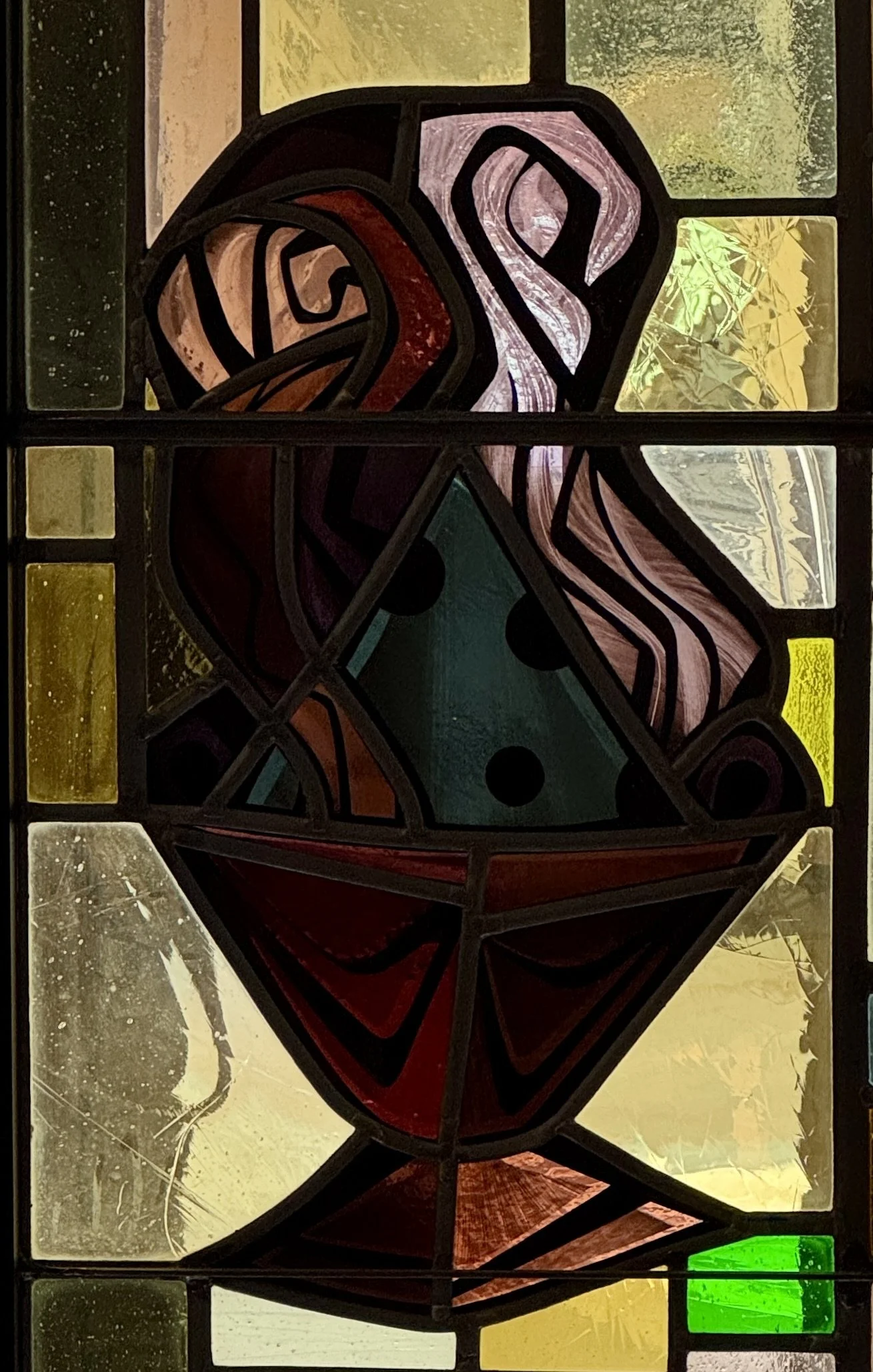
A censer (a vessel used for burning incense) represents prayers rising up to God (cf. Psalm 141:2—“Let my prayer be counted as incense before you, and the lifting up of my hands as an evening sacrifice.”).
In Christian liturgical practice, incense is associated mostly with Roman Catholic and Eastern Orthodox worship, most Protestants having rejected the practice during the Reformation. While some Protestant traditions retained this practice, the Reformed tradition viewed it as unwarranted by New Testament worship models (e.g. with Christ the true Mediator having come, we no longer needed the “mediation” of rising smoke to connect us to heaven). John Knox, for example, was very critical of the use of incense in worship, and here you can see him gazing scornfully across the entryway at the censer.
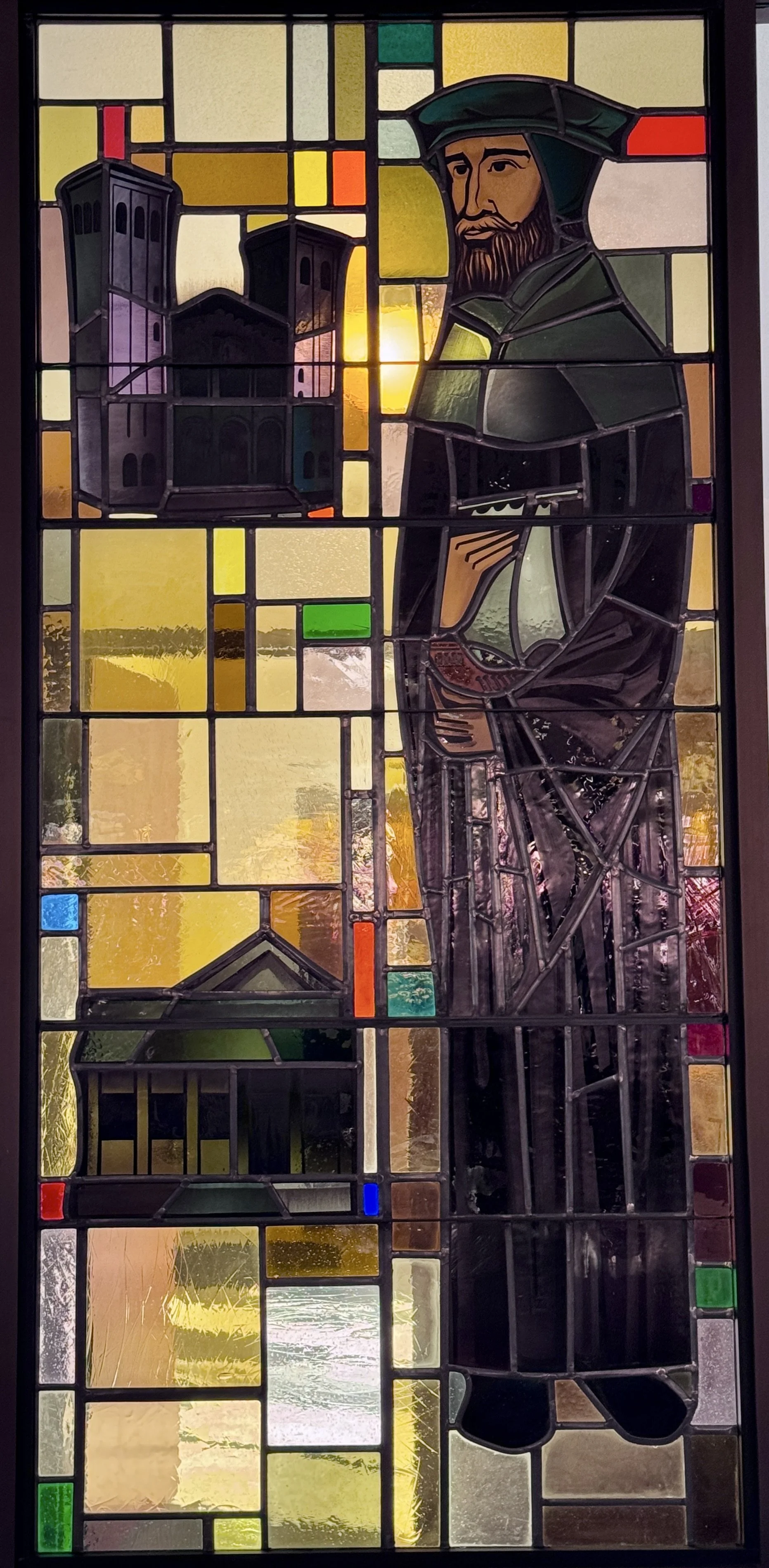
Reformer John Knox with symbols of education and mission.
Knox was the chief leader of the Reformation in Scotland, which would be a major influence on Presbyterianism in the United States through Scottish immigrants. Soon after his conversion to Protestantism (around 1544), he was imprisoned as a French galley slave (hence the ship he is lovingly holding). A few years after his release, Mary I came to the English throne, forcing Knox to seek exile in Geneva. While pastoring an English congregation there he wrote a treatise called The First Blast of the Trumpet Against the Monstrous Regiment of Women, conflating his anti-Catholic sentiment with the female Catholic sovereigns of English (Mary I) and Scotland (Mary of Scots). This treatise understandably made (the Protestant) Queen Elizabeth not his biggest fan when she came to the throne.
Knox was also the primary author of the Scots Confession (1560), which is one of the confessions in our PCUSA Book of Confessions.
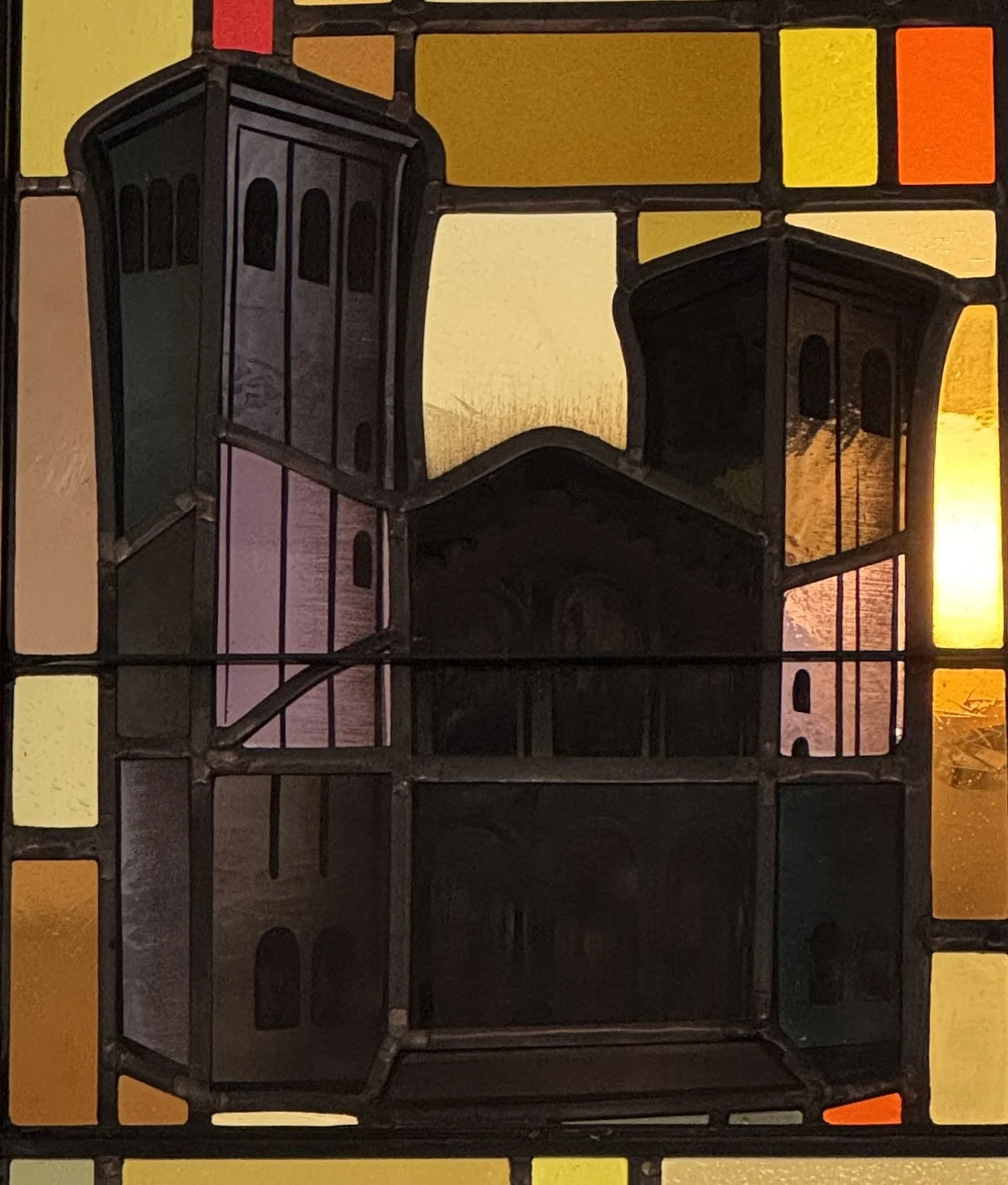
Tower of the UCLA administration building, representing the Presbyterian emphasis on education. (Go Bruins!)
Presbyterian minister Samuel Hopkins Willey (1821-1914) founded a college that was a forerunner of the University of California system.
(The image of the UCLA building next to John Knox might seem a bit random. This image used to be on a window of Rev. Willey. That window was given by Rev. Edward H. Jones, who pastored St. James from 1963-67. You might think that Rev. Jones did this to honor his alma mater, but he was actually a graduate of Occidental College. The original Willey window also had an image of a gavel and pen to represent Dr. William S. Young who, in addition to being the longtime stated clerk of the Los Angeles Presbytery and Synod of California, was one of the founders of Occidental).

Adobe building, representing the old adobe courthouse in Los Angeles, where Rev. James Woods preached and organized the First Presbyterian Church of Los Angeles in 1855. Woods was only in Los Angeles for about a year before returning to (the more civilized, at the time, northern California), and he wasn’t overly impressed with what he found in the city. His Los Angeles diary opens, “The name of this city is in Spanish the city of angels, but with much more truth might it be called at present the city of Demons.” In a later entry he comments, “It seems a plain indication of Providence that I leave this place, and the wicked will rejoice at it I have no doubt.” The First Presbyterian Church of Los Angeles struggled for its first decades, and it wasn’t even included among the initial six churches that made up the Los Angeles Presbytery in 1872, being added when it was reorganized in 1874.
The first episode of this incredible podcast discusses these early years of LA Presbyterianism.
(the abode courthouse was also originally on the Samuel Willey window)