South Windows, lower portion
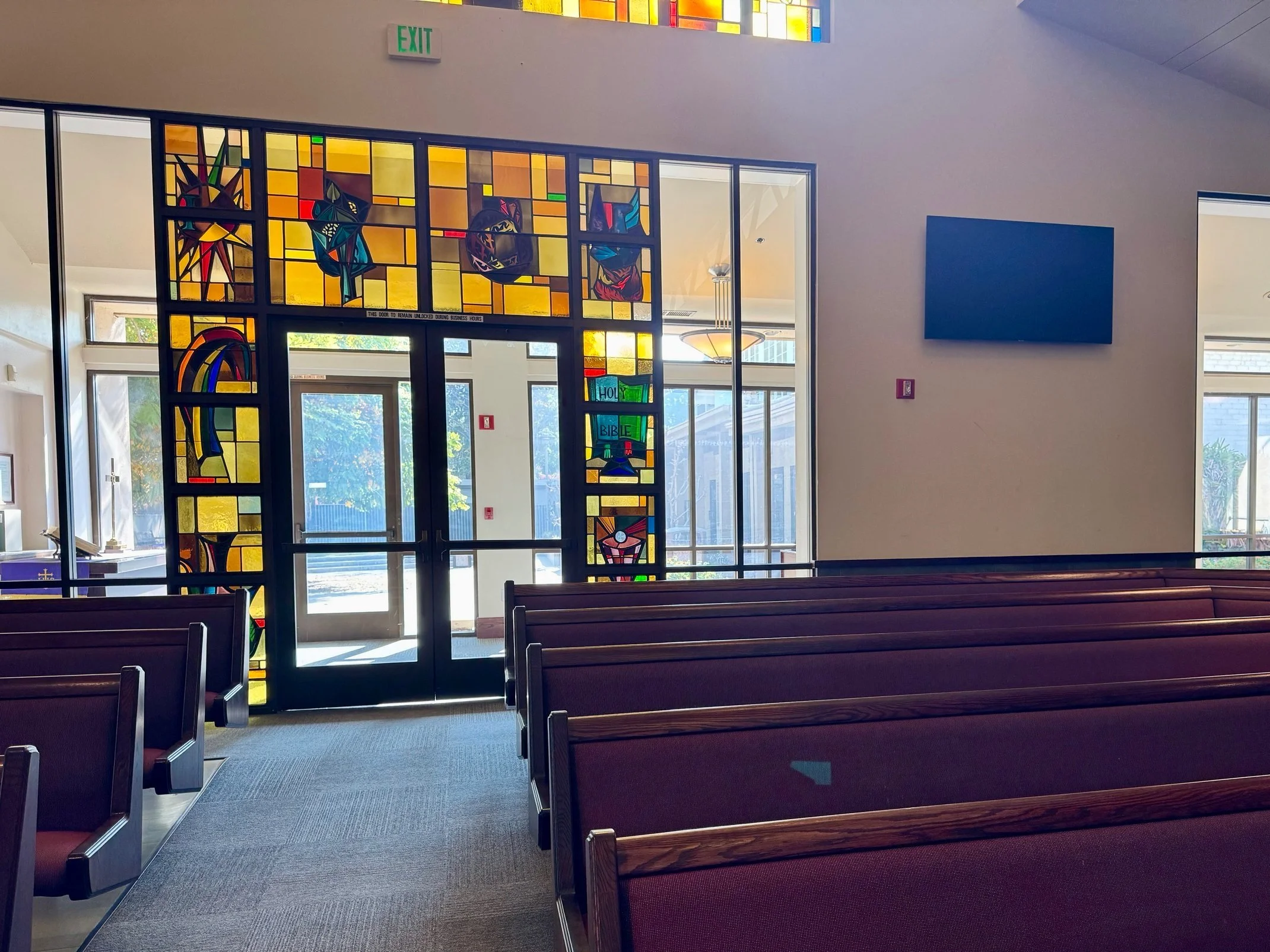
South Windows, Lower Portion.
Overview of the windows installed at the 50th Anniversary of St. James Presbyterian Church in Tarzana.
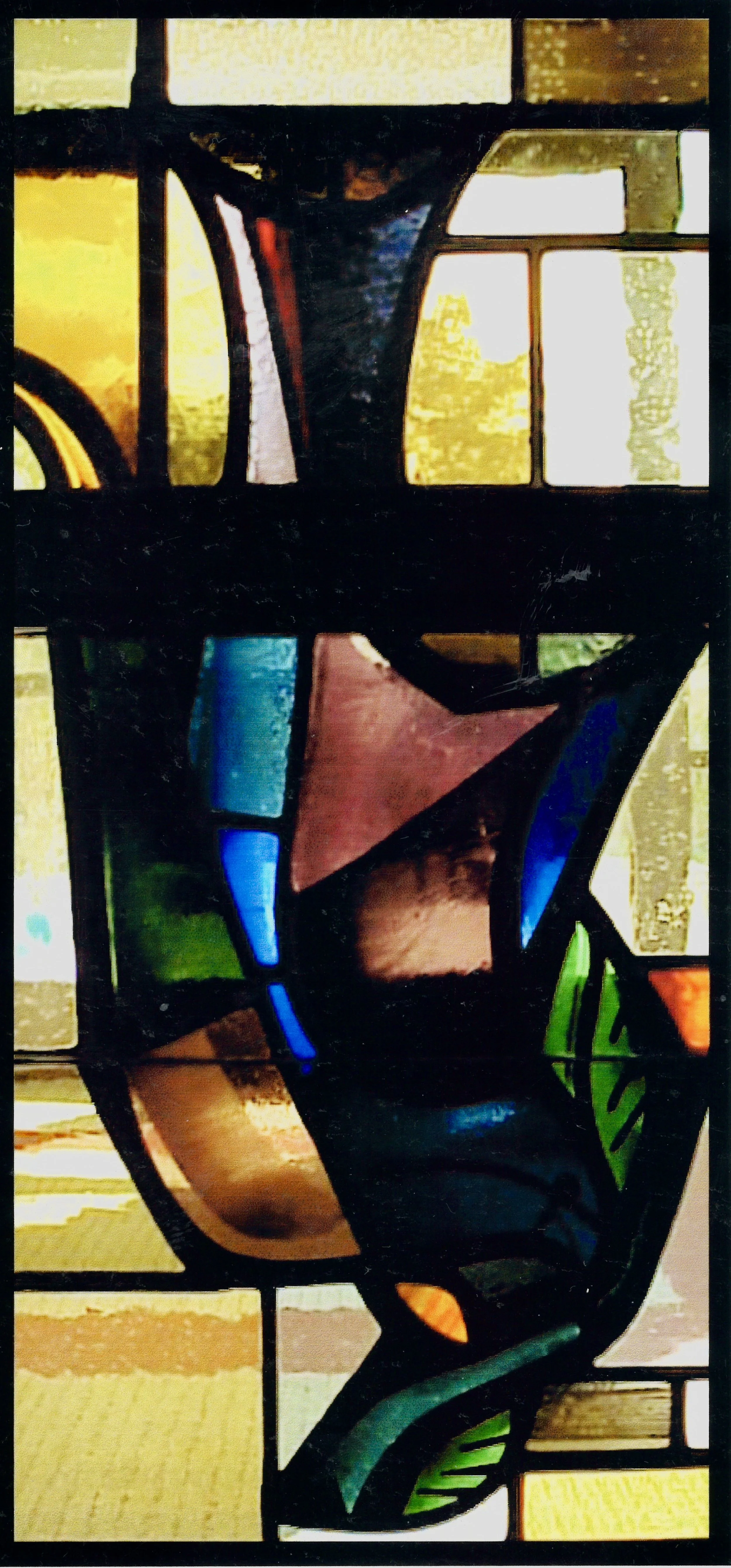
South Windows, Lower Left Side of Doors.
The Dove with Olive Branch represents peace and forgiveness. In the midst of the Great Flood, Noah sent a dove out from the ark to see whether the waters had started to subside (Genesis 8). When the dove returned with a fresh olive branch, Noah knew that the waters had by then receded below the tree line. The dove holding the olive branch represents reconciliation (the end of the flood showing that God had made peace with humankind), hope, and new life. In the Gospels, the Holy Spirit is seen descending on Jesus like a dove at his baptism.
(this dove was originally—appropriately enough—on the Noah window)
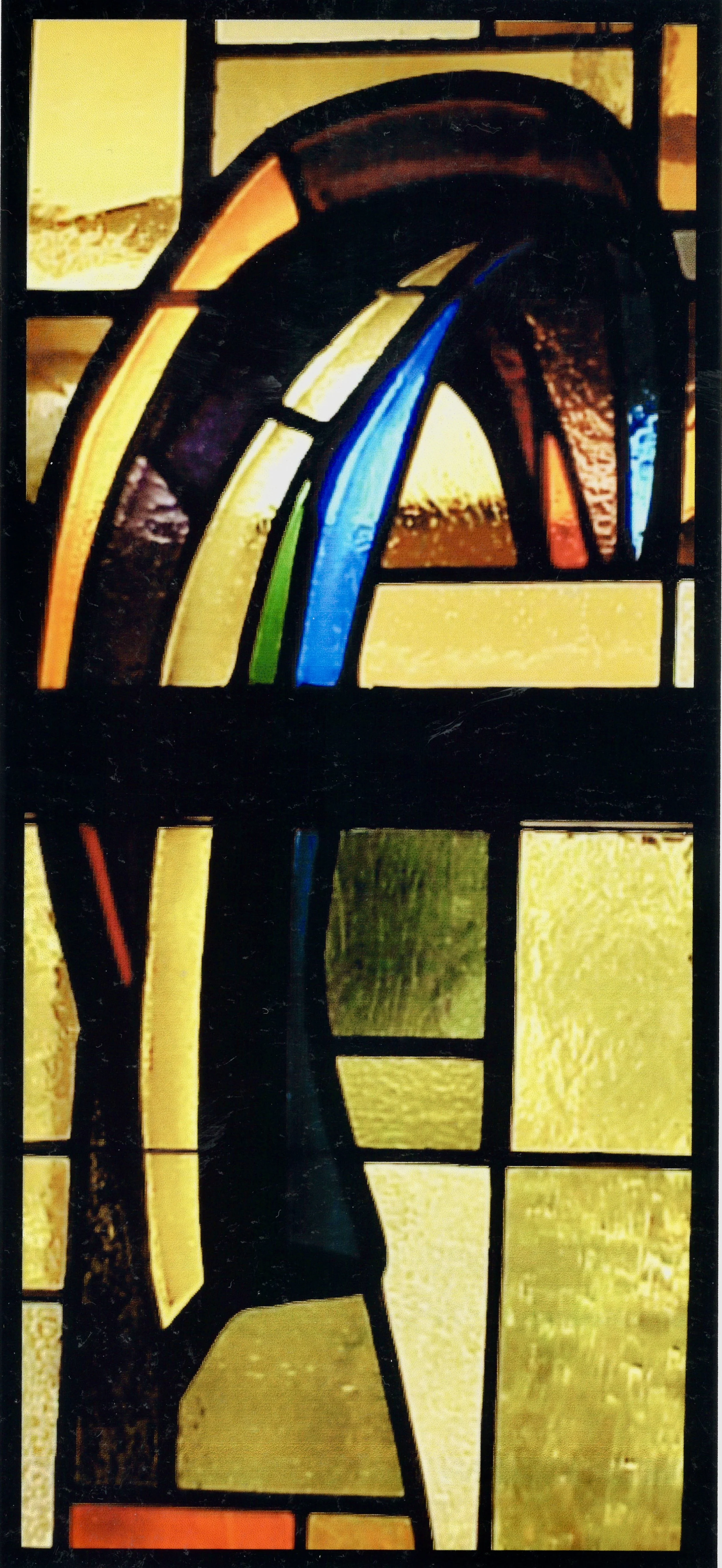
South Windows, Middle Left Side of Doors.
The Rainbow image represents God's covenant of grace with humanity, as expressed in this case in the Noahic form.
After the Great Flood subsided, God sent to Noah and his family a rainbow as a symbol of peace and reconciliation (Genesis 9). The Genesis text refers to the symbol not specifically as a “rainbow” (as we would call it), but with the Hebrew term for “bow” (quesheth), which highlights the martial nature of this imagery—this is an image of an instrument of war. Exegetes have long commented that the way that this “bow” appears in the sky indicates that future “arrows” will be directed not toward earth, but into the heavens—a sign that God will now accept punishments on our behalf.
In the book of Revelation (4:3), we find a rainbow surrounding Christ’s throne (there a Greek word specifically referring to a rainbow is used—iris, from which we get the word ‘iridescent’).
To learn more about how the symbol of the rainbow was interpreted in the early modern period, click here.
(as you might have suspected, this rainbow was originally part of the Noah window)
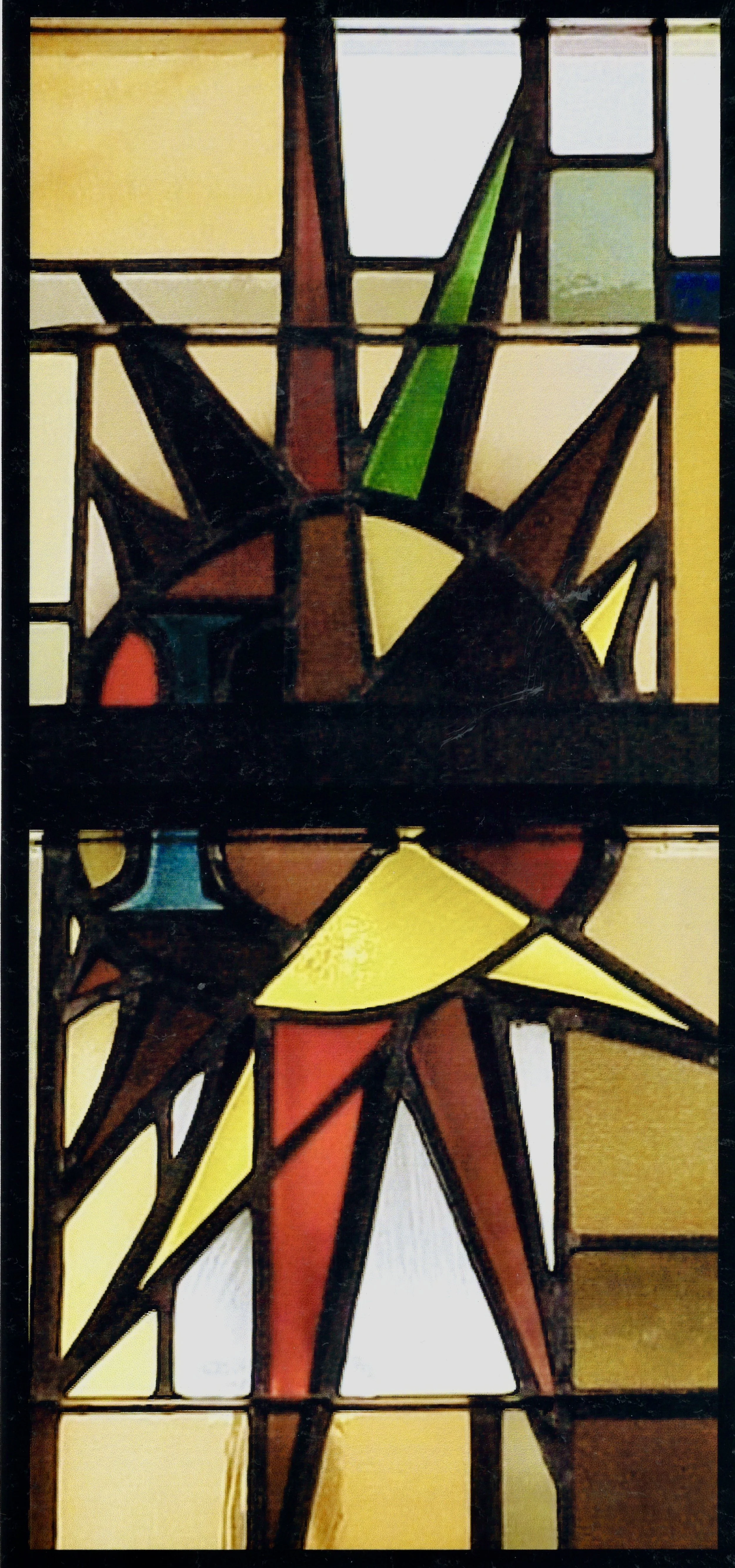
South Windows, Top of the Doors, Far Left.
The “Sun of Righteousness” represents the coming of the Messiah, Jesus Christ. The sun is a symbol of Christ from the prophecy of Malachi 4:2a— "But for you who revere my name the sun of righteousness shall rise, with healing in its wings.”
The I on the left of the sun is a capital iota, representing the first letter of the name ‘Jesus’ in Greek. The ‘sun of righteousness’ image is sometimes presented with the first three letters of Jesus’ name—IOTA-ETA-SIGMA (ΙΗΣ, or IHS), but the designers of this window seem to have been content with just the first initial.
(this image was originally part of the John the Baptist window)
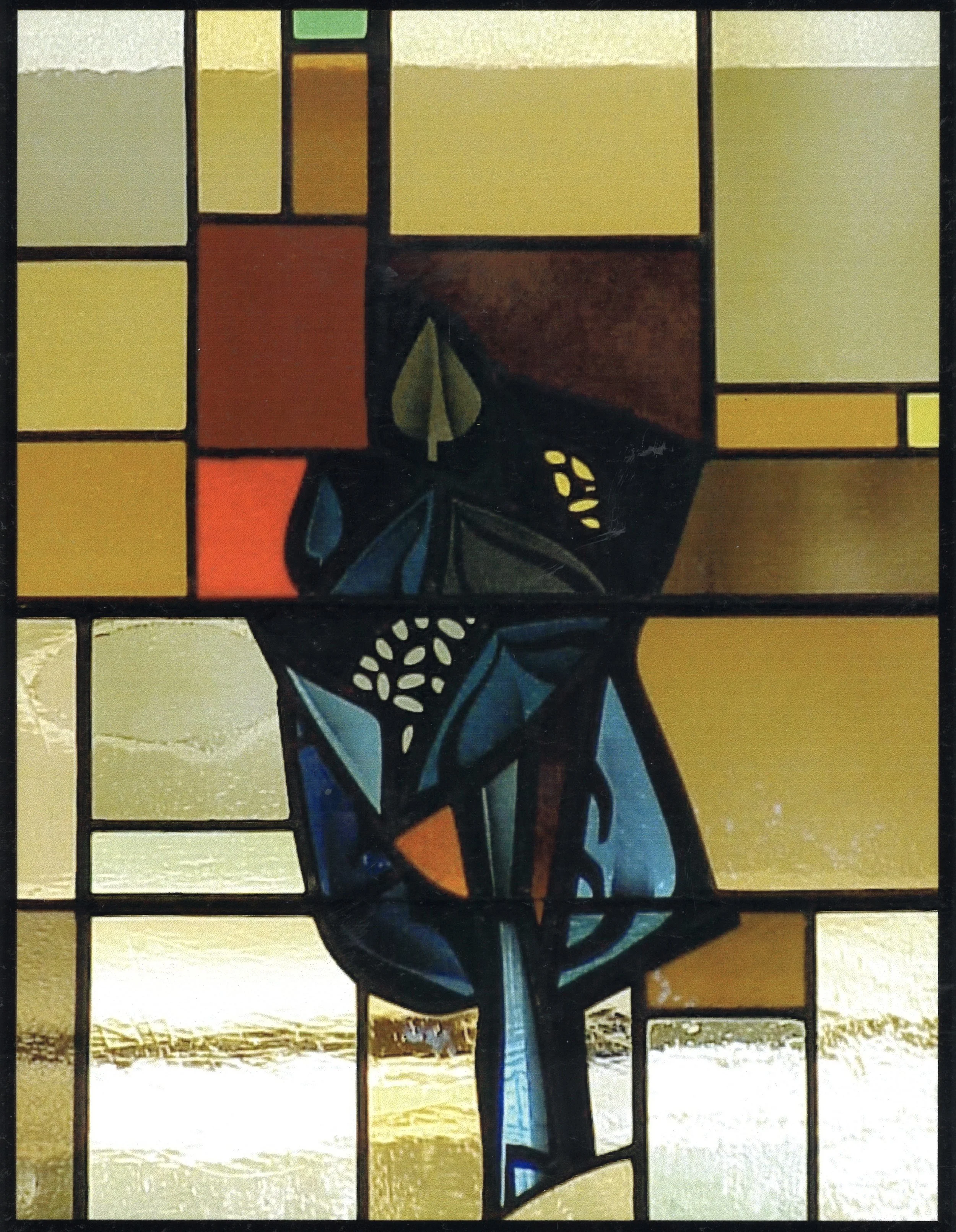
South Windows, Top of the Doors, Second from Left.
This image depicts the Glastonbury Thorn, which represents various moments in Christ’s earthly life—both his birth and resurrection (as the Glastonbury Thorn tree blooms twice a year, around Christmas and Easter), and his passion (connecting to the crown of thorns).
A local legend, dating to the medieval period, holds that the original Glastonbury Thorn tree sprouted from the staff of Joseph of Arimathea when he visited Glastonbury (in Somerset, England) as a missionary.
(the Glastonbury Thorn was originally found on the St. Matthew window)
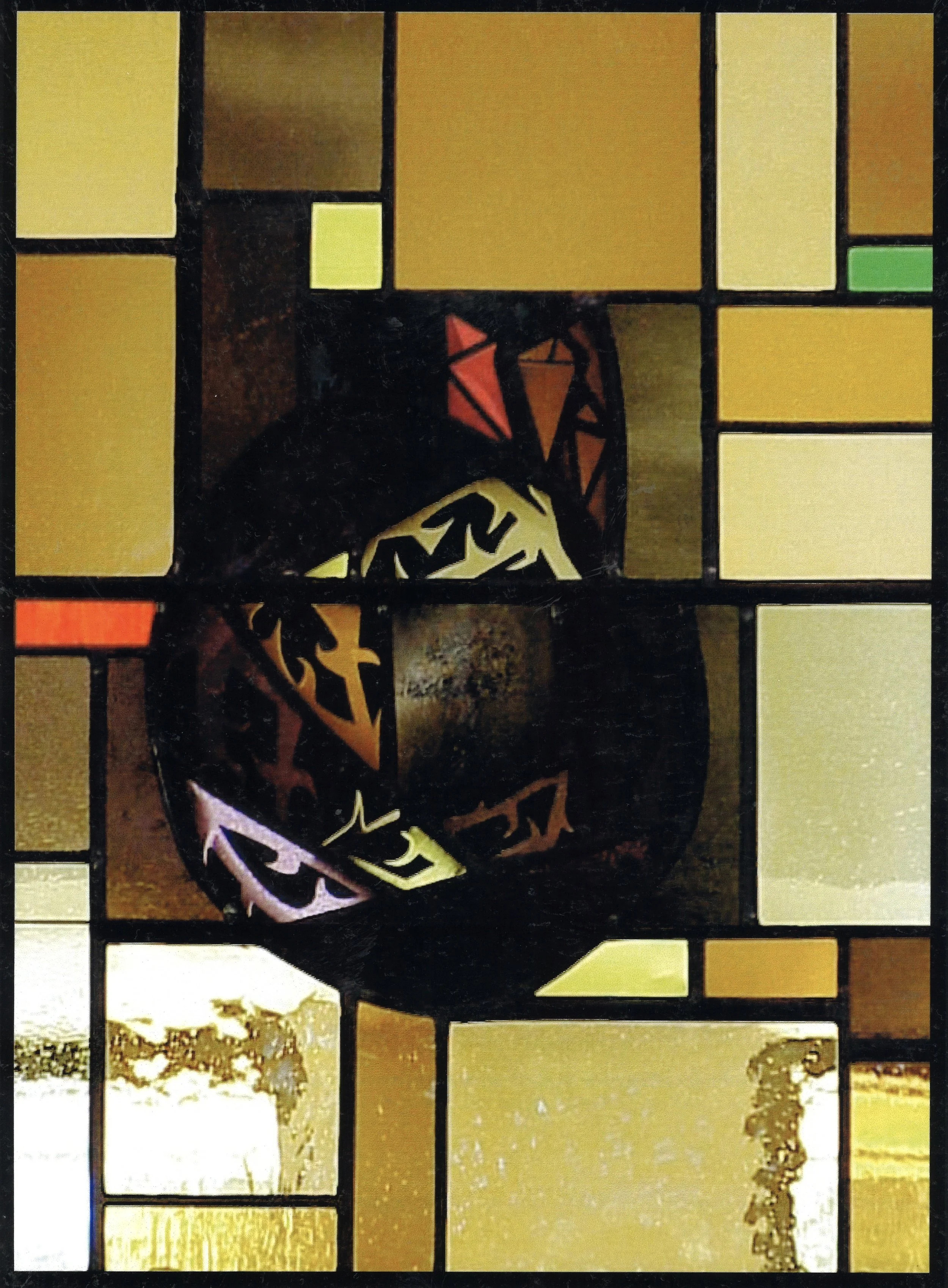
South Windows, Top of the Doors, Second from Right.
Crown of Thorns and Nails, representing Christ's passion and crucifixion.
The crown of thorns was placed on Jesus' head by soldiers before his crucifixion as a way of mocking his identity as the ‘King of the Jews.’ As is often the case with mockery, this ridicule by representatives of the empire can also be seen as an expression of fear that his royal authority is greater than the one the soldiers are under.
Throughout the Church’s history the nails and thorned crown have been used as a reminder of all that Christ suffered for us (cf. 1 Peter 2:24—“He himself bore our sins in his body on the cross, so that, free from sins, we might live for righteousness; by his wounds you have been healed.”)
(this image was originally on the St. Luke window)
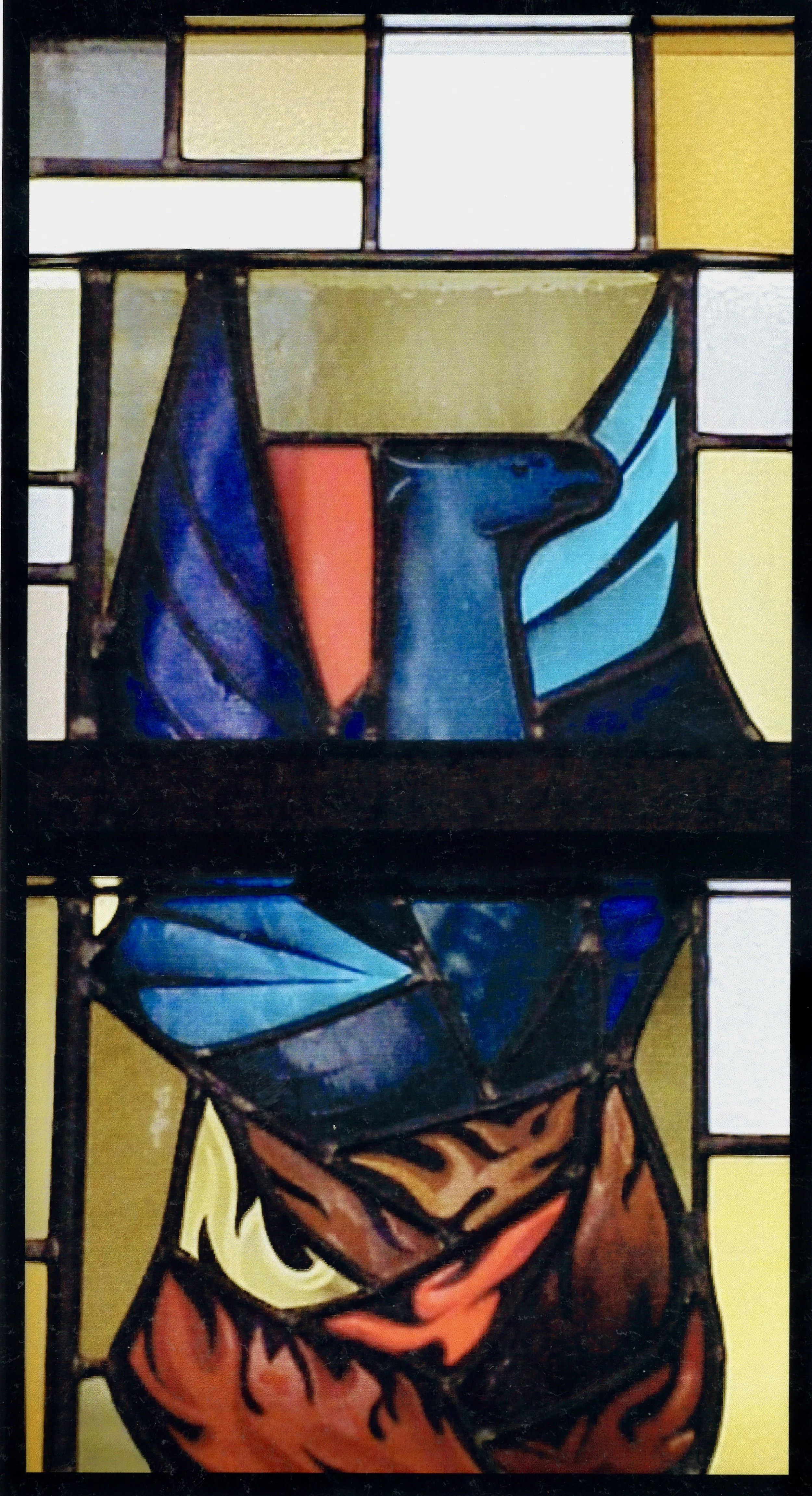
South Windows, Top of the Doors, Far Right.
The Phoenix is a mythological bird from ancient Greek legend, and with probable earlier roots in Egyptian and Persian mythology. These myths contain variations of the idea of the bird dying in some sort of flame, and then rising with new life from the ashes (sort of like an ornithological pinecone/ pine tree). While not an image that is used in Scripture, it was used by early Christian writers as a symbol of resurrection as early as the 2nd century CE, due to its popularity and ready application to Christ’s rising from the grave.
One debate among the early Christian Apologists concerned how much use of Greek philosophy to use in developing and explaining Christian doctrine. Figures like Clement of Alexandria made expansive use of pagan Greek ideas (since all truth is from God, and connecting Christian teachings to familiar concepts could help make these doctrines make sense to the uninitiated), while figures like Tertullian tended to reject the pagan packaging of Christian teachings (“What has Athens to do with Jerusalem?”). However, even Tertullian (c. 155-220) drew on the Phoenix as an image of Christ, partly due to his mistranslation of Psalm 92:12 (“The righteous flourish like the palm tree”) as “The righteous flourish like the Phoenix.”
(“Phoenix” is mentioned in Acts 27:12, but the reference there is to a place. Some translations of Job 29:18 mention a phoenix, but this is a disputed translation, with other versions having “sand” or “palm tree” in its place).
(the Phoenix image was originally on the St. John the Evangelist window)
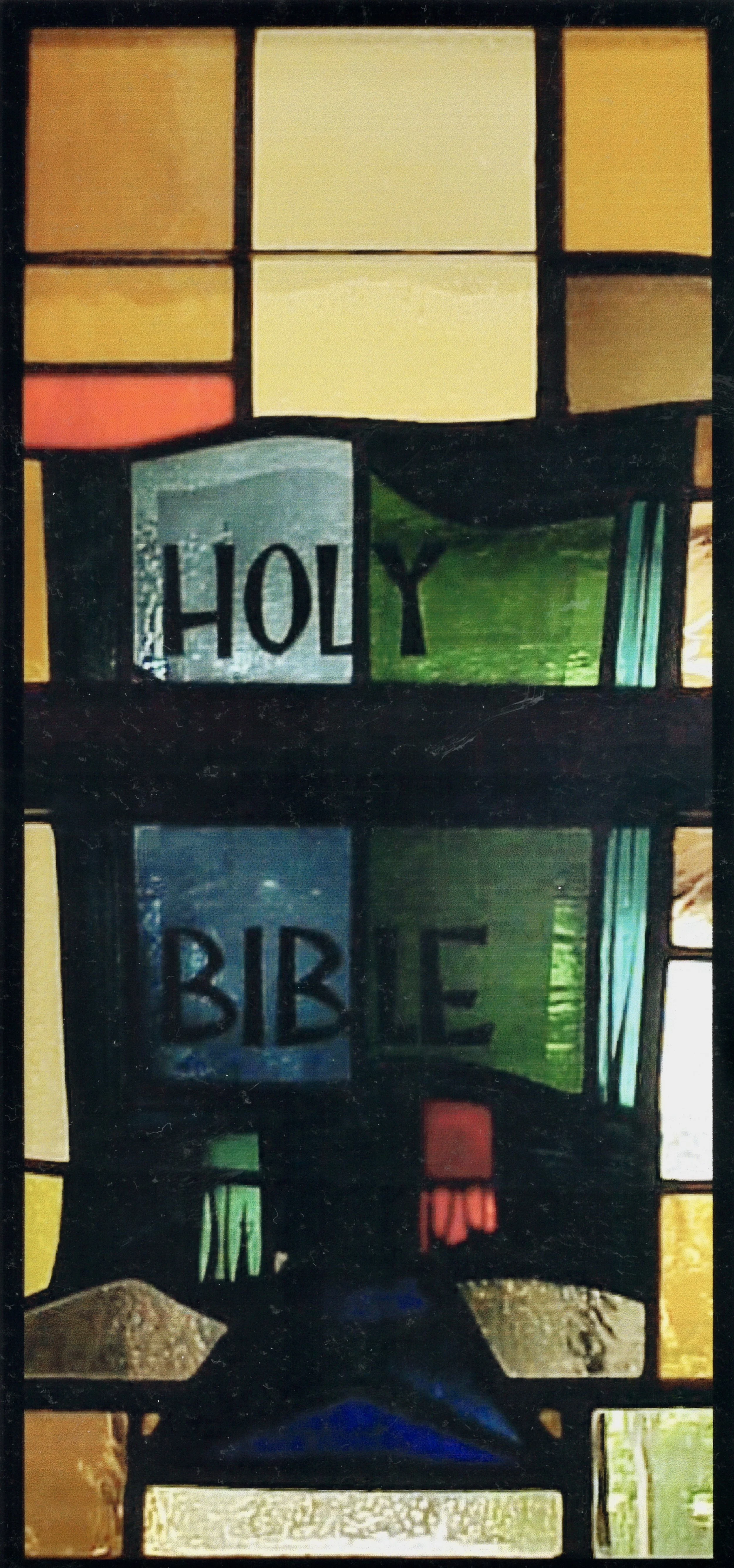
South Windows, Middle Right Side of Doors.
An Open Bible represents the centrality of Scripture to the Reformation and to our Reformed tradition (as, indeed, to all Christian traditions). We hold the Bible (comprising the Old and New Testaments) as God’s word to us, and as the clearest expression of his truth and will. One of the ‘mantras’ of the Reformation was ‘sola scriptura’ (‘Scripture alone’). This was not intended to say (as is sometimes believed today) that everything except Scripture should be thrown out, but rather that Scripture alone was the highest arbiter of truth in spiritual matters—we are to test all ideas, doctrines, and traditions against Scripture to measure their truth and validity.
(this image was originally on the John Wycliffe window)
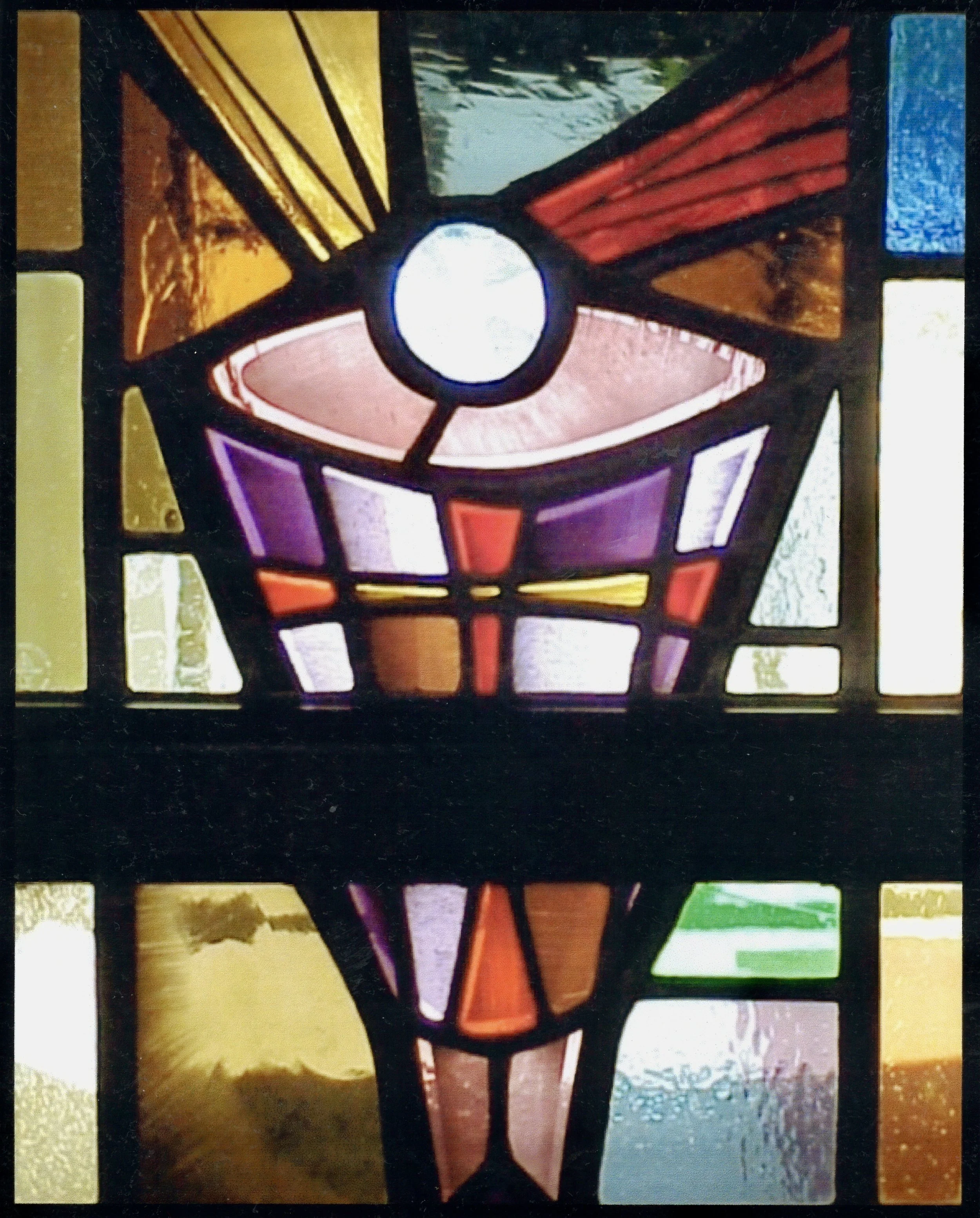
South Windows, Lower Right Side of Doors.
Contrary to popular belief, this image does not represent a high church version of Beer Pong. Rather, the Chalice and Wafer image represents the continued importance of the sacrament of communion in the Reformation. While the reformers broke from what had become the Roman Catholic conception of how Christ was present in the sacrament (called ‘transubstantiation’) and elevated the role of the preached word in worship, the sacraments remained central to Protestant corporate worship. In our Reformed tradition, “the word rightly preached” and “the sacraments rightly administered” became the two central tests (or ‘marks’) that determined whether a church was a true Christian church (with some adding a third mark of ecclesiastical discipline properly applied—that is, actually trying to live like Christians matters in determining a true church, in addition to having biblical beliefs and worship practices).
(this image was originally on the Martin Luther window)